Podcasts are a great teaching tool for kids, especially for language learning. A 2024 study published in the International Journal of English Language Studies looked at nearly a decade of classroom research and found that podcasts help students improve listening comprehension, vocabulary, pronunciation, and motivation. This makes them especially helpful for multilingual learners and for students who understand content better when they hear it rather than read it. Providing students with the option of using podcasts as a way to access information also aligns with Universal Design for Learning by giving students flexible, accessible ways to engage with content.
Check out our favorite classroom-ready podcasts below. We’ve divided the list by grade level because some might be more intense or cover more mature topics than is appropriate for younger students. You are the best judge for your own kids or students, though, so we recommend vetting all material before sharing it to make sure it’s a good fit for your students and school context.
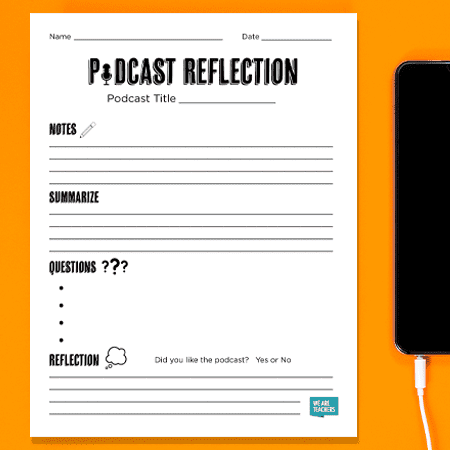
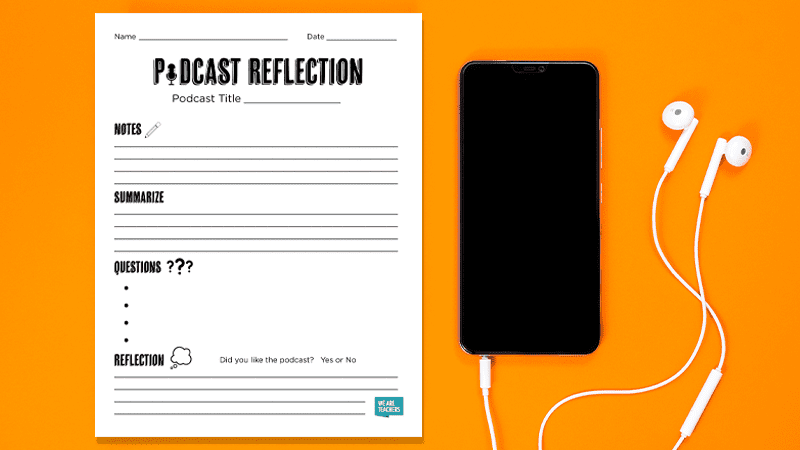
If you have a podcast-listening station or ask students to listen to podcasts in class or for homework, this reflection sheet is a perfect follow-up assignment. Just follow the link below and fill out the form to get yours.
Below are some practical tips for using podcasts with students from Hannah Irion‑Frake, a literacy coach and former elementary classroom teacher. Visit her website Reading With Mrs. IF.
Hannah has used podcasts regularly with her own students and often shares how she integrates kid‑friendly podcasts into comprehension lessons, vocabulary building, and background‑knowledge work, particularly as a way to make content accessible for students who struggle with decoding. Her approach connects listening comprehension directly to reading comprehension, making podcasts a meaningful literacy tool rather than a passive activity.
Hannah’s classroom‑tested podcast tips include:
Preteach any tricky vocabulary before listening.
Build necessary background knowledge before listening. Showing pictures or short videos can help students better visualize what they’re listening to.
Provide students with something concrete to do after they listen. This is a great opportunity to incorporate writing (or drawing for nonreaders) as a way to demonstrate comprehension. You can give students prompts, sentence starters, or questions to help them focus their responses.
Create a routine for listening to podcasts with your students and pre-teach how to listen to a podcast. This will pay off in the long run because students will know what they’re expected to do when listening.
Go beyond listening by creating your own podcasts. Check out these 10 podcasting projects you can do in your classroom.
Check out Hannah’s top podcast picks for elementary school below and follow her on Instagram at @readingwithmrsif.
Best Podcasts for Kids in Elementary School
Podcasts for elementary schoolers need to be snappy, entertaining, and jam-packed with information that young kids can understand. These podcasts are a great way to bring everything from stories to science into your classroom.
Top 5 Podcast Picks From Reading With Mrs. IF
Brains On!
Brains On
This question-driven podcast is for older students with questions that are applicable to science (How does coral communicate? Why is Jupiter Earth’s body guard?) and health class (Why do we have crushes?).
Each episode of this podcast takes two ideas and smashes them together into a debate. For example, which is better: ketchup or ranch? Clowns or magicians? The topics may be funny, but the debate techniques and communication skills kids learn are not.
This educational news podcast speaks directly to kids about current events. It’s a great way to introduce older elementary students to current events in a way that’s kid-friendly.
The premise of this podcast is so cool! Bestselling authors pair up with kids ages 6 to 12 to generate and brainstorm an idea into a full story. I love to use this podcast to teach the writing process and encourage students to hear how mentor authors handle the tricks of the trade. This is a perfect podcast to listen to during a narrative writing unit.
This award-winning podcast has hosted some big names in storytelling, including Julie Andrews, Kristin Bell, Lin-Manuel Miranda … the list goes on. Each podcast is a new story built around a theme. A great complement to narrative writing units or when you find a wonderful story to discuss alongside what you’re reading. For example, listen to a story written by an 11-year-old, the Mythical Hotdog Tradition, while reading or writing origin stories.
Each 15-to-25-minute episode of this podcast features a folktale from around the world. Yes, it’s great for a folktale unit, but I like to bring it into reading in general, letting students choose a story to listen to during silent reading or when they’re finished with independent work.
This podcast is just what the title says: short stories for kids. Use the themes to identify stories that you can bring into your class, like big feelings, friendship, creativity, or life lessons.
This is the longest-running drama podcast for kids. Think old-fashioned radio plays but for today’s kids. It’s all about the adventures of the world’s most brilliant scientist, Dr. Floyd. Carve out some time each week to listen to the adventures of Dr. Floyd, and students will also learn how to follow a story over time, the same as they do during a novel read-aloud.
A podcast of stories that are told without bells and whistles, just good-old storytelling using voice and narrative. The simple format is great for younger listeners and students who are learning English.
This mindfulness podcast has 15-minute guided relaxation stories that each have a socio-emotional focus. I use this for an end-of-the-week meeting or to reinforce social-emotional skills students are working on.
In this story, two unlikely heroes take on an AI villain and learn about old-fashioned skills like kindness along the way. I love this podcast for kids in grades 4 and up who are learning how to be digital citizens. The plot makes the challenge of AI more relatable to kids.
In this science and nature podcast, Lulu Miller takes us on a nature walk each week, exploring a surprising topic like what if the moon disappeared, or lies and truths about stars. I look for episodes that have to do with what we’re already learning, and use them to expand kids’ background knowledge or stretch their thinking about the topic.
Guy Raz and Mindy Thomas explore science topics and other questions that kids have. Search for an episode that will satisfy the curious kids in your class. For example, after a unit on sea animals, check out the episode about swimming with sea lions. I also love the materials that come with each episode—discussion questions and articles to support each topic.
This science podcast uses stories about science to answer questions like “What if trees didn’t exist?” and “How does vision work?” Choose an episode to either build knowledge at the start of a unit or extend knowledge at the end of one.
This podcast from Vermont Public Radio always starts with kids asking questions: What are taxes and tariffs? Who invented tacos? Then, the hosts interview experts and explain the concepts in kid-friendly language. Search for the topics you’re studying and use this podcast to literally answer students’ questions.
In this game-show-style podcast, kids have to figure out who is lying and who is the expert on a topic. I love this podcast for upper elementary schoolers who are learning about media skills, especially what makes sources reliable and how to spot “fake” news.
This is a news podcast in a kid-friendly format. You can have students listen to the daily news and engage in discussion or writing assignments without worrying about the vocabulary or content.
This ethics-based podcast poses ethical questions like “Do we need a rule to be a good person?” or “Should we pay people to be kind?” Then, the hosts debate the question. Use this podcast together with Smash Boom Best to develop students’ critical thinking and debate skills.
Each episode explores one “what if” question, like “What if kids ruled the world?” and “What if candy were good for you?” Take one question, let students answer it, then listen to the What If World podcast to see how Mr. Eric tackles it.
This is a great podcast for upper elementary students. Each episode is 15 minutes long and has tons of information presented in a humorous way. This would make for a great Fun Friday tradition.
This podcast from Brains On provides stories about historical events in a way that kids can not only understand but engage with. I’ll assign this podcast to extend kids’ knowledge about everything from gladiators to the history of hip-hop.
Another history podcast that brings events and questions to life for kids. Who, When, Wow has episodes about ancient history that make the content, which can seem a little irrelevant for today’s kids, amusing and interesting.
A music education podcast for kids, Noodle Loaf explores musical skills kids need and songs for early elementary schoolers. Yes, this is great for music class, but it’s also good for morning meeting or brain breaks.
To be honest, a bunch of the podcasts for elementary schoolers would work for middle schoolers too. But here are podcasts that especially cater to the middle school set.
Best Podcasts About Books and Stories
Book Club for Kids
Book Club for Kids
Real kids talking about real books. This podcast is a perfect way to introduce your readers to a new book and drum up excitement for a new release or book you’re about to assign.
This old-time-style radio program offers an informative adventure in each episode. Eleanor is a hero that outsmarts villains, foils devious plots, and uses her wits to figure out the big story. I love this podcast for enjoyment, listening to an episode each week as a way to wind down and just share a story together.
In this fiction anthology, Antoine, the main character, is transported to a world with princesses and princes. It takes place in a quest to save the queen. Episodes are released every other week, and the website includes transcripts so students can read along.
In this narrative series, middle schoolers Marcus Aronson and Mondo Ramirez (Cupid and the Grim Reaper) work together to harness the powers of life, death, and love. This series has everything middle schoolers love in narrative, including superpowers and, well, the grim reaper.
This podcast is hosted by 15-year-old Tai Poole, who asks and delves into questions that middle schoolers are ready to think about like “Can their generation make Earth Day cool again?” and “Are we alone in the universe?”
This podcast provides kids’ perspectives on everything from media to school and life. It’s great for adding to discussions that students are already having.
As middle schoolers turn into teenagers, they may want to hear from actual teens. This Teenage Life provides teenagers’ perspectives on topics from academic pressure to teeth to connecting with nature.
Neil deGrasse Tyson hosts this podcast that “brings the universe down to Earth.” Episodes are also hosted by big names in science and science fiction, like William Shatner and Charles Liu.
This science podcast made both the elementary and middle school lists because it’s so great at answering science questions in kid-friendly terms. Even middle schoolers are building background knowledge, so Tumble speaks directly to them.
Short Wave explains science concepts in 10 to 15 minutes, the perfect amount of time for a student to work in independent practice or as a warm-up or cool-down.
This vocabulary-focused podcast discusses new words each week. I love this as an introduction to an ELA lesson because it gets kids thinking about words and learning new ones.
This history podcast approaches history with storytelling and curiosity. Search past episodes to find a podcast that relates to what you’re teaching, like Episode 104 about two hoaxes that occurred in 1917. The humor and fun facts appeal to middle schoolers and help them connect with larger historical events and context.
For secondary classrooms, podcast choice really matters, says Betsy Potash, former high school English teacher, veteran podcaster, and founder of Spark Creativity. In addition, through her free workshop, Camp Creative, she helps educators use podcasts both as content‑rich texts and as mentor models for student thinking and creative work.
Check out Besty’s top podcast picks for high schoolers below and follow her on Instagram @nowsparkcreativity.
Top 5 High School Podcast Picks From Betsy Potash
Life Kit
Life Kit
NPR’s Life Kit provides a discussion and tips related to everyday problems, something high schoolers are ready for.
Check out How I Built This for stories about companies that students have heard of, like Boom Chicka Pop and Tate’s Bake Shop. There are tons of lessons about work ethic, creativity, and life.
This long-running podcast filled with narratives around a weekly theme is a great one to bring into high school classrooms. You can use whole episodes or just one story to discuss the content and how it resonates with high schoolers.
This podcast features entrepreneurial and inspiring teens and describes their process. It’s a great way to bring some design thinking and reflection into conversations about how we work and how teens can make a difference.
Adults share the things that embarrassed them most as kids. A great way to help teens put their own experiences in perspective. I recommend this podcast for advisory class.
This podcast provides information and discussion about culture, as well as stories and advice from almost-grown-ups. It’s a good one to bring into history class when discussing current events or advisory class.
In this question-based podcast, Will and Mango ask and answer questions that high schoolers have likely wondered about: Will we ever live without sleep? How do rats keep outsmarting humans? The great thing about this podcast is that it takes a serious look at some ridiculous topics, teaching students that every question is worth pursuing.
This podcast, which goes behind the scenes of college admissions, is a helpful listen for high schoolers as they apply for college. Counselors and advisors can use it to shed light on different parts of the process and what’s relevant for teens today.
This podcast about economics explains current events and economics in a way that everyone can understand. If students are talking about an economics topic, check this podcast to see if they have an episode that would explain it to students.
As teens learn more about how the brain works and what this means for their lives, Hidden Brain is a great resource. The podcast explores the unconscious patterns that drive our behavior and what we can do about them.
In this twice-monthly podcast, students hear an update from the small town of Night Vale. The announcements include weather, news, and info about mysteries around town. Incorporate this into an ELA class or advisory and follow the story all year long.
Let students into authors’ work habits and ideas with the First Chapter Friday podcast. Betsy Potash has interviewed Nancy Tandon, Matt de la Pena, and other authors. We love this podcast for getting kids interested in reading a new book.
Josh Clark and Chuck Bryant host a discussion about topics ranging from the Stonewall Uprising to chaos theory, El Niño, and Rosa Parks (not all in the same episode). Whatever you teach, keep Stuff You Should Know in your repertoire for interesting podcasts to assign to build students’ background knowledge.
Malcolm Gladwell researches things in history that are overlooked or misunderstood and re-examines them. The core question is did we get it right the first time or should we rethink what we know about the past? Yes, this podcast is great for history classes, but it’s also good for building critical thinking skills in other courses as well, like psychology and science.
This weekly science podcast takes science topics that are in the news and explores them. This is a great podcast to bring into the classroom to deepen students’ knowledge of science that’s happening right now. Use it as a warm-up on Friday mornings.
Short Wave explains science concepts in 10 to 15 minutes, the perfect amount of time for a student to work in independent practice or as a warm-up or cool-down.
Ready to incorporate podcasts into homework or a classroom lesson? Grab our free podcast reflection sheet! Just click the link below and fill out the form to get yours.